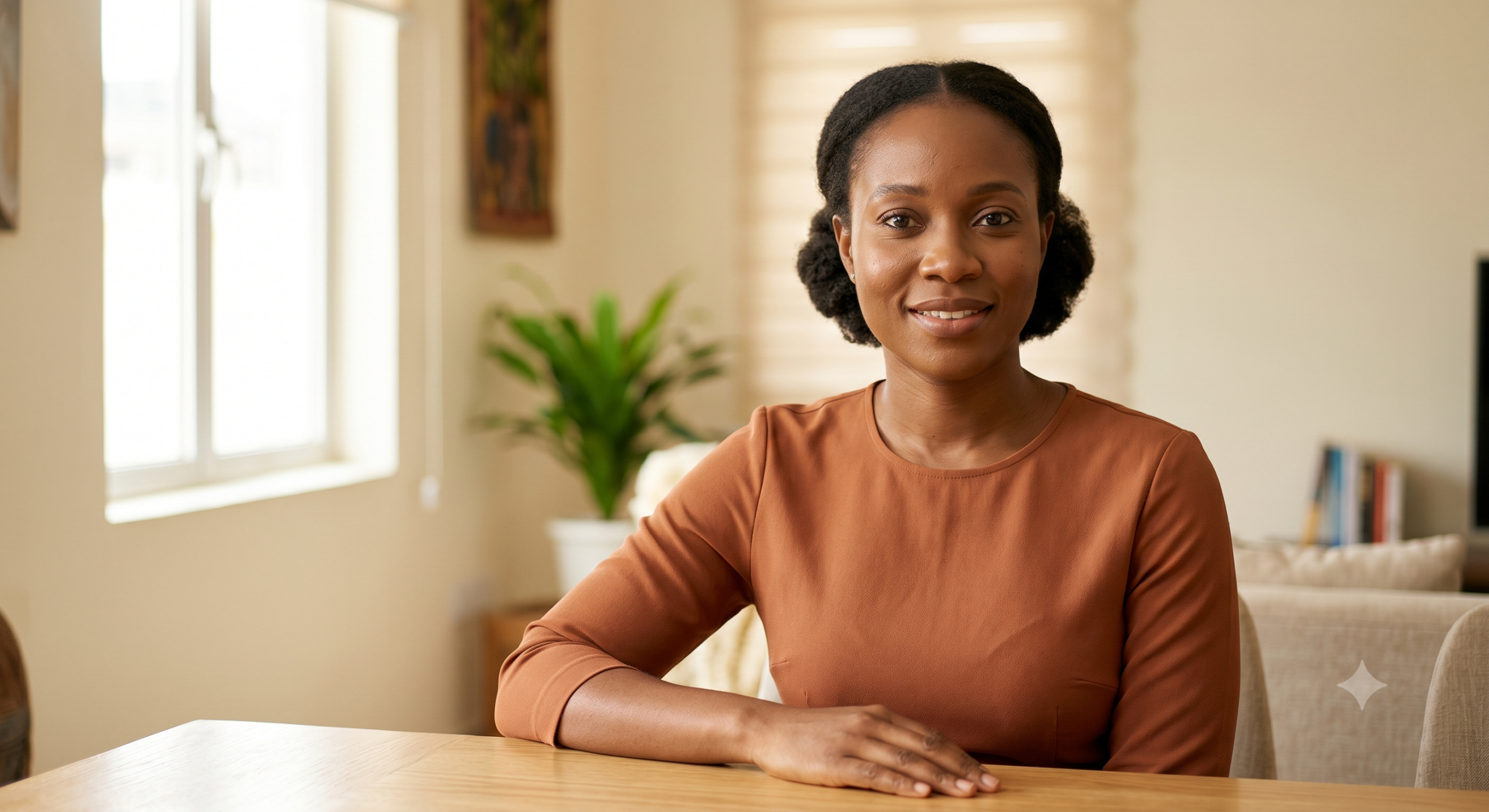
You set an alarm last night.
Not for morning devotion. Not for work. Not for an early flight.
You set an alarm at 2am to change your pad so you don't ruin the mattress.
Again.
You lay in the dark, waiting for it to go off, staring at the ceiling — knowing that even if you drift back to sleep, the dull, heavy, constant ache deep in your pelvis won't really let you rest. When did this become my normal?
Every morning starts with a calculation now. How heavy is today going to be? Can I wear that outfit or is it too risky? Do I need to double up? How far is the nearest bathroom from wherever I'm going?
You carry extra pads in your bag like a medical kit. You have learned which office chairs have safer fabric. You've quietly rearranged your social calendar around your cycle without explaining to a single person why.
At work, you smile. You deliver. You attend the meetings and answer the emails. But inside, you are managing a silent, exhausting war that nobody around you can see.
Your doctor has mentioned surgery now. You've googled "myomectomy" at 11pm more times than you can count. The recovery period. The hospital costs. The recurrence rates. My auntie had the surgery. Five years later they came back. What is the point?
You want another child. You have wanted another child for two years. But between the bleeding, the anaemia, the fatigue, and the fear — that dream feels further away with every passing cycle.
And the part you haven't said out loud to anyone?
Your husband has grown quiet. Not unkind. Just careful. Distant in the way people become when they don't know how to hold a situation they can't fix. You understand. You don't know how to hold it either.
You are in your late thirties. Time does not feel like your ally. And you are so, so tired of solutions that do not work.
Drop everything you are doing right now and listen to every word she is about to say.
Here is something they will not tell you in that hospital consultation room.
Your grandmother did not have a word for "estrogen dominance." She did not own an ultrasound machine or hold a degree in gynaecology or belong to a Facebook support group.
But she had bitter leaf. She had moringa. She had soursop and ginger and the quiet, generational knowledge of exactly what each of them was for.
And in her generation? Women did not set 2am alarms to change their pads. They did not flood through their clothing on ordinary Tuesdays. They did not sit in consultant's offices being told to book dates for surgery to remove things that should not be growing in their wombs in the first place.
Somewhere between that generation and ours, we stopped listening to what our food was doing to our bodies. We replaced what worked with what was convenient. And the fibroids found the silence.
Her name is Amaka Okafor. She is thirty-eight years old. She lives in Ajah, Lagos. She was diagnosed with three uterine fibroids in October 2022. She bled through her mattress. She sat in a consultant's office and was told, calmly and professionally, to book a surgery date.
She refused. Not out of stubbornness. Out of a deep, quiet certainty that she had not yet tried everything available to her.
First thing you should know about her: Amaka is not a doctor. She is not a herbalist, a naturopath, or a wellness influencer with a product line to sell you. She is just a woman who was desperate enough to stop listening to the systems that were failing her — and start listening to something older, wiser, and closer to home.
This is the story of what she found.

Her diagnosis happened during a routine abdominal scan at a private hospital in Lekki.
She had gone in for something unrelated — persistent indigestion she had been ignoring for too long. The technician moved the probe around, and she watched his face shift into that careful, neutral expression that medical professionals are trained to wear when they have found something they were not looking for.
"Three fibroids," he said. "The largest is approximately 5.2 centimetres. You'll need to speak with a gynaecologist."
She drove home. She sat in her car in the compound for forty minutes before she went inside. Her husband Kunle was in the living room with the TV on. She told him. He muted it, took her hands, and said: "We'll figure it out."
He meant it. She knows he meant it.
But that was before the bleeding started.
For the first few months after the diagnosis, she lived in a quiet kind of denial. Yes, she had fibroids. Yes, she should be careful about stress and what she ate. But she was still managing. Still functioning. Normal, mostly.
Then her period arrived in February 2023.
And it did not behave like her period.
It behaved like a flood.
She bled for eleven days. She soaked through a pad in under an hour at her worst. The cramps were severe enough to send her to bed for two days. On Day 8, she experienced what she now knows is called a "flooding episode" — a sudden, uncontrollable heavy bleed — in her own bathroom, and she sat on the floor afterward for a long time, just breathing. Just processing.
That was the night she set her first 2am alarm.
The months that followed were a test of endurance.
Her cycle became unpredictable. Her energy was disappearing. The bone-deep fatigue that iron tablets only partially addressed became her constant companion. Her haemoglobin dropped. Her doctor prescribed tranexamic acid to slow the bleeding. It worked for two cycles. Then it stopped working.
She could feel Kunle recalibrating around her. Stepping carefully. Not pressing for the baby conversation they had been having since 2021. One evening she heard him on the phone in the bedroom, keeping his voice low, and she did not need to hear the words to understand what the conversation was about.
She cried in the shower so he wouldn't hear.
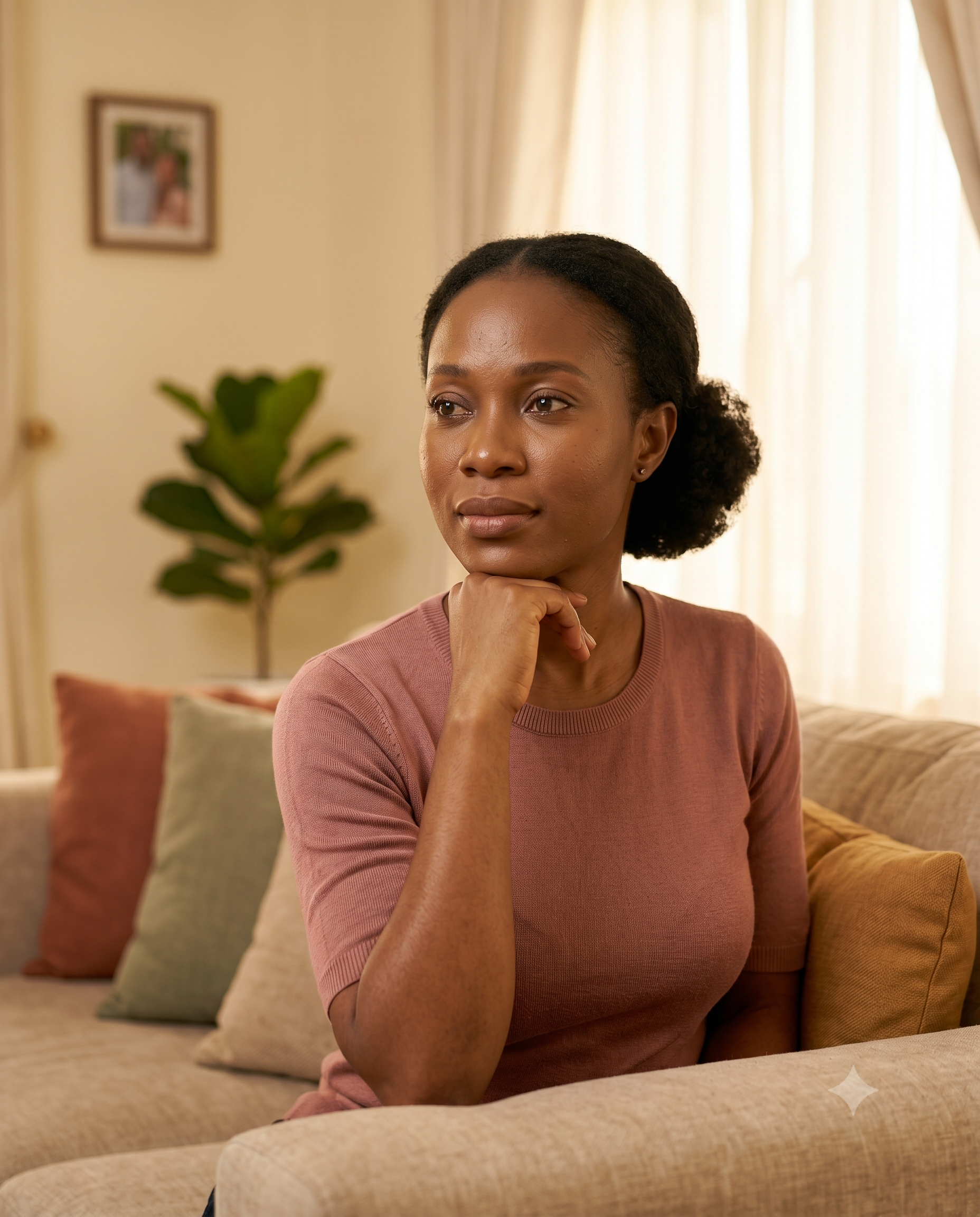
By the middle of 2023, she had tried six things. All six had failed her.
The tranexamic acid was the first failure. It slowed the bleeding for two months, then her body adjusted and they were back to where they started. Her doctor said this happens sometimes. She wanted to ask him: then what?
She ordered herbal capsules from an Instagram vendor — a full "fibroid protocol" package with before-and-after testimonials and a celebrity story attached. Thirty-five thousand naira. Six weeks. She took every capsule exactly as directed. Nothing changed except her pocket.
Someone in a WhatsApp group said that fasting and prayer had resolved her fibroids entirely. Amaka is a woman of faith. She fasted. She prayed with full sincerity. She believes in the power of prayer. But God, in His wisdom, did not rearrange her hormones through fasting alone that season.
A woman in her street gave her an agbo formula from a herbalist in Bariga. She took it for two weeks. It thoroughly cleaned out her digestive system. The fibroids were unmoved.
Her gynaecologist suggested contraceptive pills to regulate her estrogen levels and reduce the bleeding. Three months. The side effects — the headaches, the mood changes, the bloating on top of the bloating she already had — left her feeling worse than the fibroids.
And finally: the hot water bottle. Her most loyal, most honest companion. Good for the cramps. A genuinely useful tool. Completely useless for the cause.
She was spending money and months on temporary relief. Nobody had explained to her why the fibroids were growing. Nobody had told her what was feeding them.
It was her cousin Titi's baby naming ceremony in September 2023 that changed everything.
The ceremony was in Ajah, at Titi's mother-in-law's compound. Amaka almost didn't go — she was in the careful, low-energy phase of her cycle and every public gathering felt like a risk management exercise. But Titi would never have forgiven her. So she packed her bag carefully and went.
At some point in the afternoon, she slipped away from the main gathering for some air near the back of the compound. And she heard a voice behind her — warm, unhurried, completely sure of itself — say:
"Oya, bring that for me. These fibroids don't know who they are dealing with."
She turned around.
The woman speaking was in her late sixties. She had the kind of stillness that comes from spending a lifetime being calm in rooms where other people are panicking. She was speaking to one of Titi's aunties, who she later found out had just received her own fibroid diagnosis that month.
Her name was Mama Ehi. Sixty-seven years old. Retired midwife. Thirty-five years at the University of Benin Teaching Hospital before she retired to Lagos to be near her children. Over three thousand babies delivered. A woman who had seen the inside of female health from every angle imaginable.
She did not plan to introduce herself. But something in her walked toward the woman before her mind had finished deciding to.
Mama Ehi was not surprised that Amaka came to her. Women like her expect to be found.
Amaka explained her situation — the diagnosis, the bleeding, the tranexamic acid, the Instagram capsules, the surgery conversation — in the abbreviated, slightly embarrassed way you explain private medical things to a stranger at a naming ceremony.
She listened with her arms folded and her eyes very steady. When Amaka finished, she was quiet for a moment.
Then she said:
"Everything you tried was treating the symptom. Nobody told you what is feeding the fibroid."
She said it like it was a fact everyone should already know. A gap she was simply filling.
"Fibroids feed on estrogen," she continued. "When estrogen in the body is high, they grow. When estrogen is brought down and regulated, they reduce. Your job is not to fight the fibroid. Your job is to stop feeding it."
She told Amaka exactly what was raising her estrogen. The supermarket chicken. The refined carbohydrates. Processed meat. Certain seed oils. Food stored in plastic containers for years. She spoke about it the way a builder talks about materials — factual, specific, unsentimental.
"And then," she said, "you must use what God put in this soil to bring the estrogen down. Bitter leaf. Unripe plantain. Ugu. Moringa. Ginger. Soursop. Your grandmother did not have a name for estrogen dominance. But she knew these things. She ate them because that was what was available. She did not know she was protecting her womb. But she was."
She described preparation methods. Timing. Sequencing. Specific Nigerian measurements Amaka would understand without conversion charts.
Amaka nodded and smiled and privately thought she was describing something far too simple to work.
Amaka understands the skepticism completely. Because she had it too.
She drove home that evening and sat at her kitchen table thinking: A cup of bitter leaf juice is going to shrink a 5.2-centimetre fibroid. This is what it has come to.
She had spent over sixty thousand naira on solutions that didn't work. Mama Ehi was describing ingredients from the Ajah market that would cost her under two thousand naira combined.
It cannot be this simple. If it was this simple, every woman in Nigeria would already know it.
But then she thought about Mama Ehi's eyes when she spoke. The absolute calm of someone with nothing to sell and nothing to prove. The thirty-five years of watching women's bodies. The three thousand babies.
And she thought: what did she have to lose?
The next morning, she went to the market.
The first ten days, nothing happened.
She made the bitter leaf juice exactly as Mama Ehi had described. She removed the supermarket chicken. She stopped the refined carbohydrates. She stopped storing food in plastic containers. She added the herbal remedies in the specific sequence Mama Ehi had given her.
On Day 6, she nearly stopped. She felt exactly the same. Every morning she was preparing things in her kitchen at 6am like a woman in a folktale, and nothing was showing for it.
On Day 8, Amaka texted the number Mama Ehi had given her. She replied within the hour: "Keep going."
She kept going.
Day 11 was the day she noticed something.
She woke up and the familiar pelvic heaviness — the constant, grinding pressure she had been living with so long she had stopped noticing it as unusual — was lighter. Not gone. But lighter.
She stood in the kitchen and pressed her hand gently against her lower abdomen and just stood there. Not sure if she was imagining it. Not ready to hope yet.
By Day 14, the bloating she had carried for months — the hard, inflated feeling in her lower belly that made her clothes fit differently — had noticeably reduced. Her work trousers fastened without the usual careful adjustment.
Day 18: her period arrived.
Understand what those words meant to her at this point in her life. Her period arriving had come to mean bracing. Preparing. Setting alarms. Calculating risk. Fear.
This time: six days. Not eleven. Six. The flooding episode she had been dreading did not come. She used a normal pad. She slept through the night — both nights — without setting any alarm.
She sat on her bathroom floor again. The same floor. But this time she was not in shock. She was crying from relief.
Day 30, she returned to the hospital.
The scan showed the fibroids were still there. The largest had not disappeared. But it had reduced from 5.2 centimetres to 3.9 centimetres.
The consultant looked at both scans side by side and asked her what she had been doing differently.
She told him. Everything. The food swaps. The herbal protocol. The castor oil packs. All of it.
He was quiet for a moment. Then he said: "Continue."
That was all she needed.
The week after her scan results, Kunle came home to find her in the kitchen. Not bracing against the counter managing pain. Not calculating how close she was to the bathroom. Just cooking.
He stood in the doorway and looked at her for a long moment. Then he said:
"Amaka. You look different. Lighter. What have you been doing?"
She turned around and told him everything. He sat at the kitchen table and listened without interrupting for nearly two hours. When she finished, he said: "Start from the beginning. I want to understand all of it."
That was the night she began putting everything Mama Ehi had taught her — and everything she had since researched, verified, and built on — into a proper written document.
Two months after those scan results, her Auntie Ngozi heard about what she had done through the family. She is sixty-one, post-menopause, but still experiencing fibroid-related pelvic pressure and discomfort. Amaka shared the protocol with her. Three weeks later, she called Amaka to say her symptoms had reduced more than they had in years.
Her cousin Sandra came to her after Ngozi spoke to her. Sandra is thirty-four and single, and had been living with irregular, heavy cycles, constant bloating, and fatigue for months — dismissed by three different doctors as "just stress." She started the protocol. By week four, she told Amaka her cycle was the most normal it had been in two years.
When your auntie and your cousin are both calling you to report results, you stop thinking it is coincidence.
When the messages from women in your WhatsApp groups, your friends' friends, your cousins' colleagues start arriving too — you stop thinking it is personal luck.
And when she realised she simply could not guide each woman individually anymore...
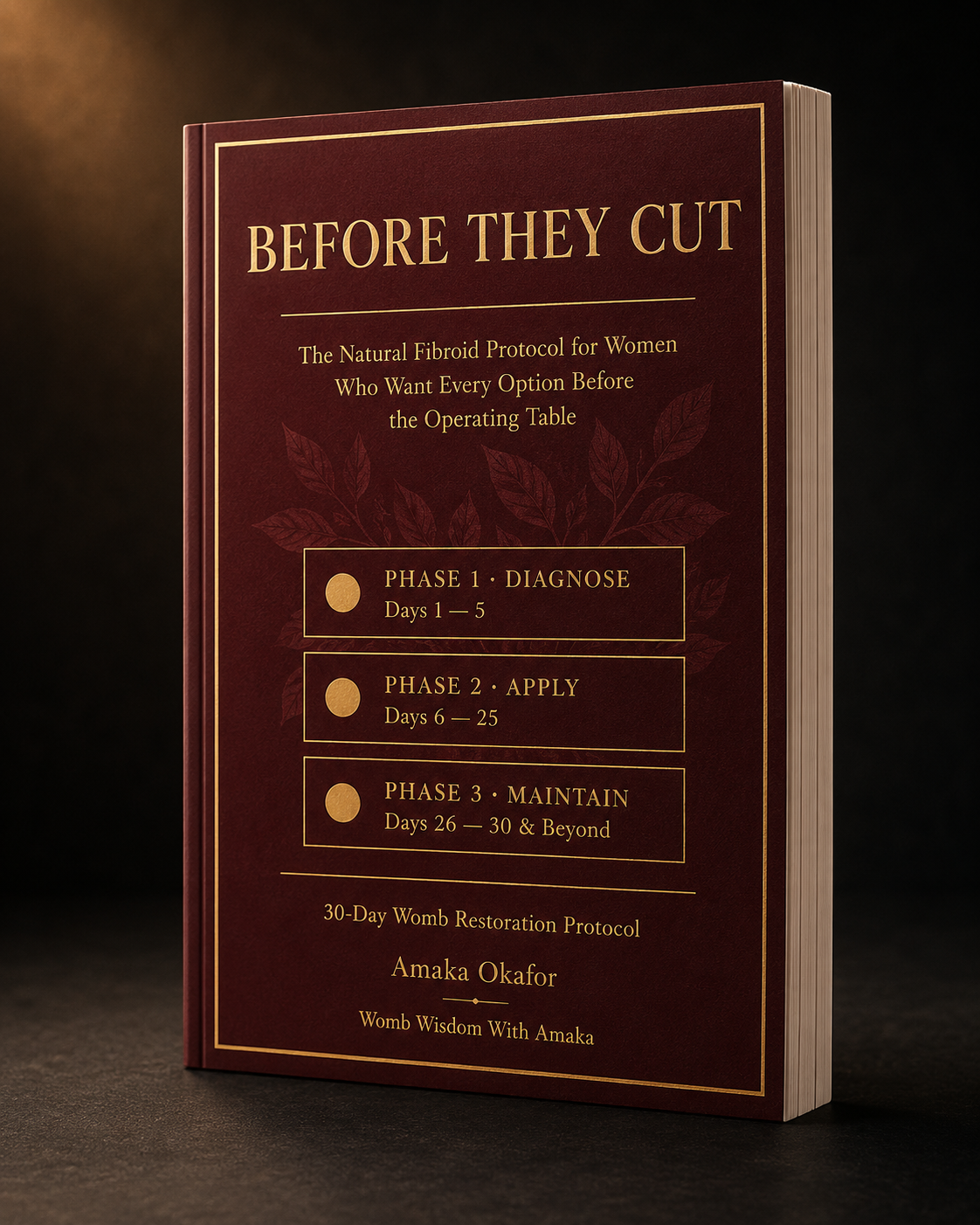
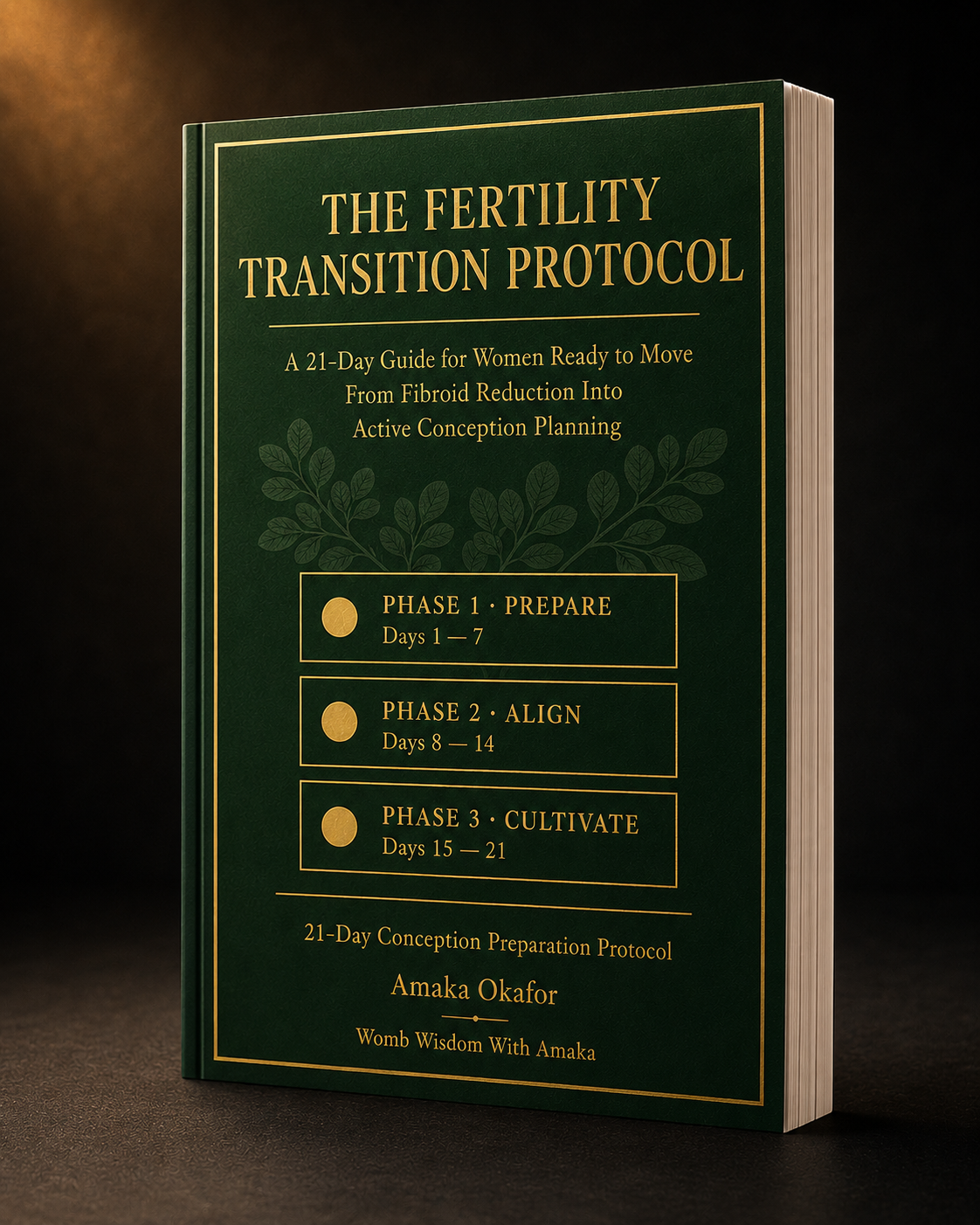
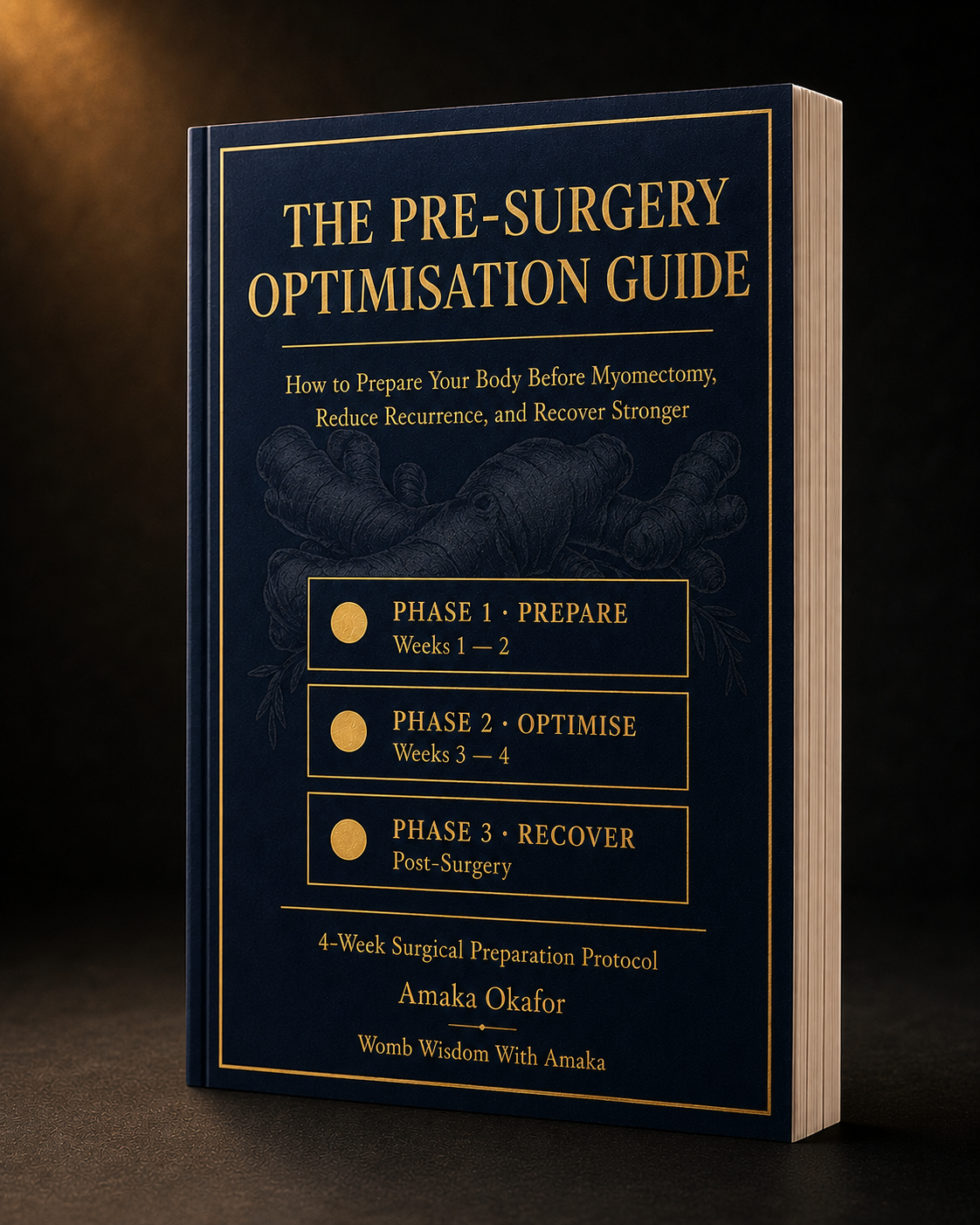
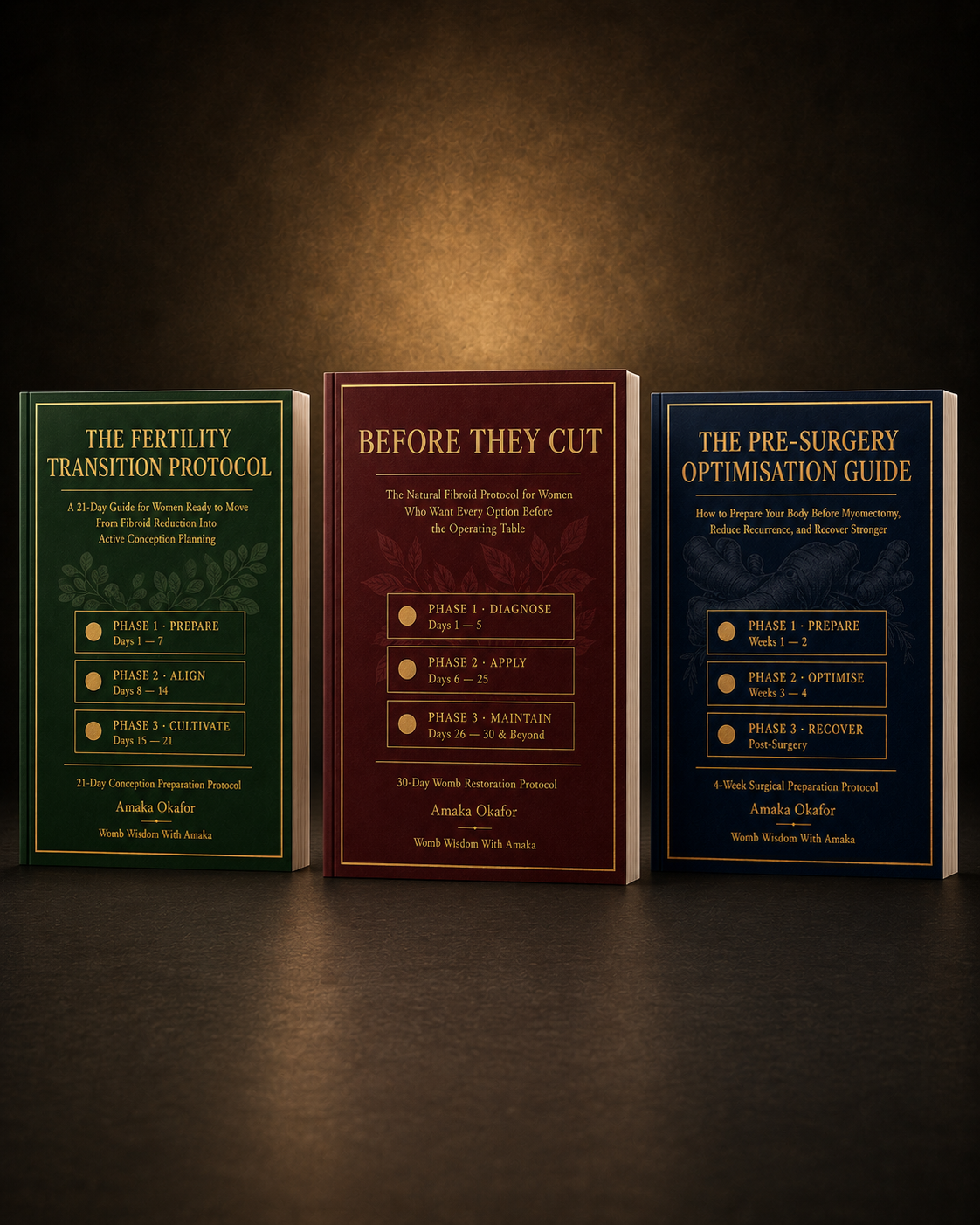
She wrote it all down.
Share Your Experience